

Technical dialogue as the foundation of resilient water infrastructure
Representatives of the State Hydraulic Works of Türkiye (DSI) visit Amiblu production and technology facilities
Long-lasting water infrastructure is developed through continuous technical exchange between customers and suppliers, where real-world requirements shape engineering, design, and long-term performance.
As Türkiye continues to develop and safeguard its water infrastructure under increasingly demanding climate conditions, informed material selection becomes more important than ever. In this context, DSİ regularly visits both national and international suppliers to understand how infrastructure solutions are engineered, manufactured and quality-controlled. As part of this approach, representatives of DSİ recently visited Amiblu production facility in Spain and its technology centre in Norway.
DSİ is Türkiye’s leading public authority responsible for the planning, development, management, and operation of the country’s water resources. With an annual investment volume of around USD 5 billion, DSİ is one of Türkiye’s largest public investment bodies, overseeing irrigation systems, flood control measures, drinking water supply, hydropower generation facilities, and the allocation of water resources nationwide. Its mission is to make Türkiye’s water resources available in line with science and technology, while respecting environmental sensitivity and sustainability principles.
From production floor to project reality
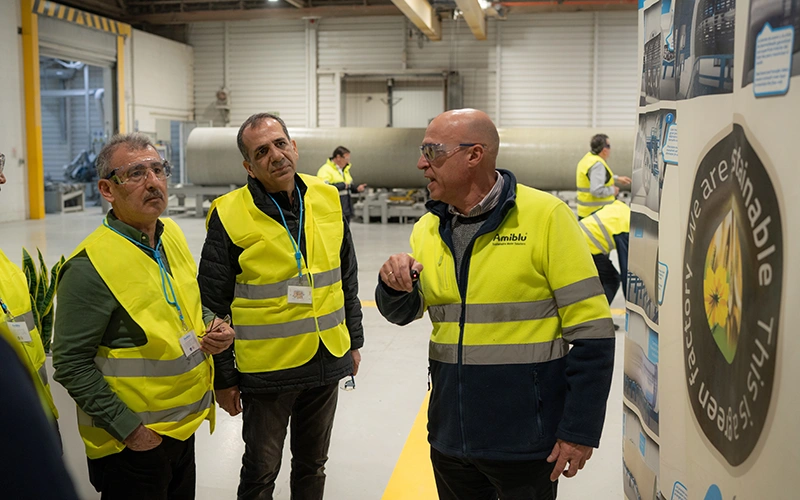
The visit began at the Amiblu production facility in Camarles, Spain, where discussions centered on how large-scale water infrastructure solutions are manufactured and implemented in practice.
Beyond the production process itself, the exchange focused on real-life challenges encountered in irrigation projects in Türkiye, many of which are comparable to conditions in Spain, including climate pressure, water scarcity, and complex terrain. These shared challenges provided a common reference point for discussions around design choices, installation methods, and operational reliability.
The above-ground pipeline installations sparked particular interest, as such solutions are less common in Türkiye. Seeing how these systems are designed, installed, and operated in comparable conditions offered valuable perspective on alternative approaches to irrigation infrastructure.
Engineering, development, and long-term performance
At the Amiblu Technology Centre (ATEC) in Norway, the focus shifted from production to engineering, development, and long-term system performance.
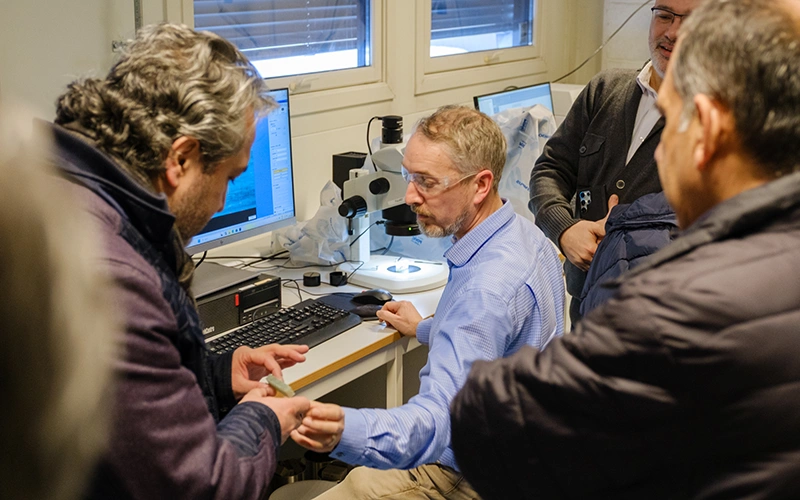
In-depth discussions with the product development team addressed technical challenges across the entire pipe system, from pipe and coupling design to gasket performance and long-term durability, with the aim of ensuring reliable installations over generations. These discussions focused on real project requirements and operational needs, which are used to guide product development at Amiblu.
Following the technical meeting, DSİ representatives visited the laboratory facilities. The Amiblu testing laboratory in Sandefjord is accredited to ISO 17025 by the national accreditation body, with the accreditation reviewed annually to ensure continued compliance and the reliability of test results.
Reflecting on the visit, Mr. Mehmet Ekinci, DSİ Deputy Managing Director, emphasised:
“The global footprint of the company was particularly impressive. Operating production facilities across different continents and having experience in climate conditions ranging from –30 to +50 degrees demonstrates a high level of technical maturity.
We were also impressed by the examples of above-ground installations, as well as by the long-term test samples in the laboratory, some dating back to 1979. We have not previously seen such a comprehensive engineering and testing setup in the GRP field.”
Technical dialogue as a basis for product development
For DSİ, visits of this kind form part of how public water authorities evaluate infrastructure solutions beyond specifications and documentation. Seeing manufacturing processes and testing first-hand, and discussing solutions to specific technical challenges, supports informed decisions on planning, standards, and long-term asset management.
For Amiblu, opening its production and technology facilities to public authorities and engaging in technical dialogue is the company’s way of developing products that are not only long-lasting, but that also address specific technical challenges and meet the demands of a changing world and climate. Visits like these reflect a shared understanding that resilient and sustainable water infrastructure is the result of commitment from both the customer and the supplier, with the best solutions shaped by evidence, operational experience, and continuous technical exchange.

