
Turning Production Residues into Valuable Raw Materials
Glass fibre reinforced plastic (GRP) stands for outstanding performance and long service life. At the same time, these very properties have long made recycling a challenge. With an innovative in-house process, Amiblu Germany GmbH is now closing this gap by consistently reintegrating production residues into pipe manufacturing – without compromising material quality.
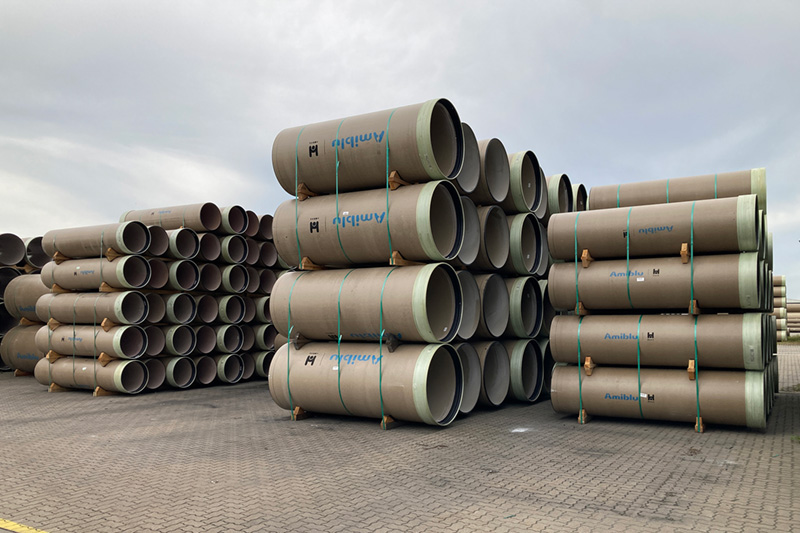
For decades, GRP pipe systems have proven their value in pipeline construction thanks to their low weight, high mechanical strength, resistance to corrosion and chemicals, dimensional stability and impermeability. These characteristics ensure durability, reliability and a wide range of applications.
Recycling GRP, however, remains complex due to the firm bond between glass fibres and the polymer matrix. Conventional approaches such as mechanical recycling or thermal recovery often lead to downcycling or the permanent loss of valuable raw materials. Amiblu has therefore taken a different approach.
Closing the Loop in Production
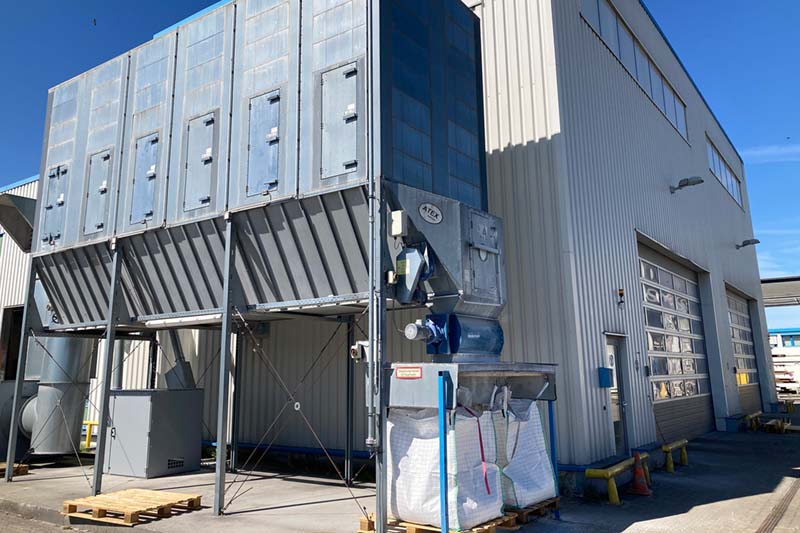
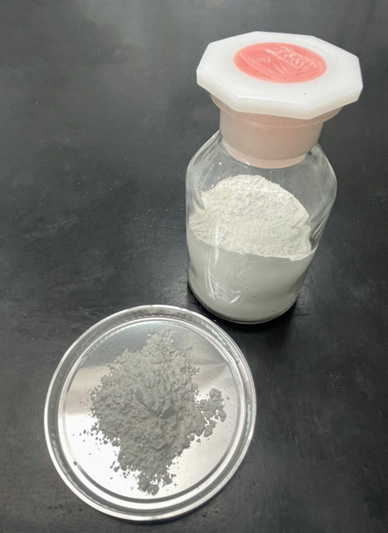
During pipe production using the centrifugal casting process (Hobas technology), around 200 tonnes of grinding dust are generated each year. Until recently, this material was disposed of externally. Today, Amiblu reprocesses this grinding dust and feeds it directly back into production. As a result, around 90 percent of production waste is now reused.
Extensive laboratory and long-term testing, including at an accredited testing facility in Norway, has confirmed that pipes manufactured with recycled grinding dust fully match conventional pipes in terms of mechanical properties and performance.
From Innovation to Series Production
Following three years of intensive research and development, the recycling process has been successfully implemented in series production in Germany since summer 2024. The benefits are clear: reduced consumption of virgin raw materials, lower disposal and material costs, and an improved CO₂ footprint. A rollout to additional European production sites is planned.
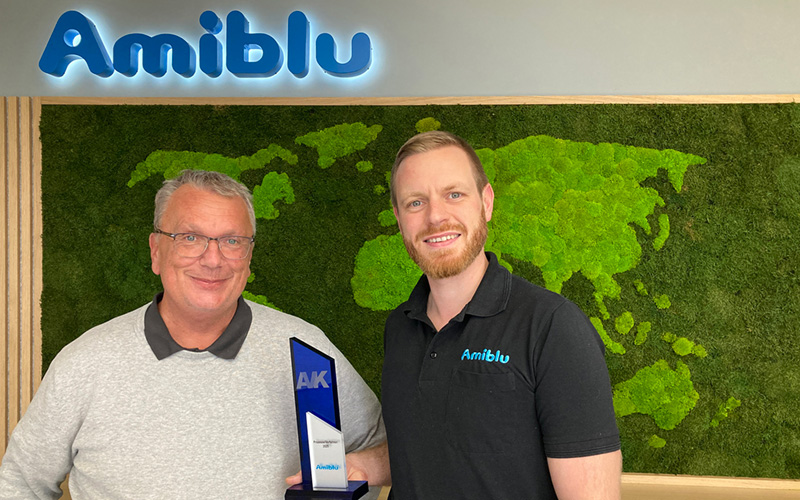
By viewing production residues as valuable raw materials, Amiblu is setting new standards in the GRP industry. This pioneering approach was recognised with the AVK Innovation Award 2025 in the category Innovative Processes/Procedures, underlining the importance of sustainable manufacturing solutions for the future of composite materials.
In the following interview, Plant Manager Christian Kühne and Process Engineer Tobias Müller explain how the idea of using production residues as raw materials was successfully transferred into series production.
Why is recycling GRP so complex?
Kühne: This is due to the material structure. The glass fibres are firmly bonded to the plastic matrix through chemical and physical processes. As a result, apart from thermal recovery, the main option has been to use GRP waste, for example, as a filler in other products. However, this represents a form of downcycling of high-quality materials. Our process changes this: the resulting dust is reused in the production of new pipes. Essentially, it creates a closed-loop system.
What was the initial idea behind the project?
Müller: From a sustainability perspective, our primary goal is always to avoid production residues or at least reduce them to a minimum. However, pipe production cannot be entirely waste-free. That is why we changed our perspective and discussed, in an open-ended manner, how the grinding dust could be used meaningfully.
Kühne: There were various concepts and approaches, and we were also in contact with other companies that had ideas for reuse. One proposal we found particularly interesting involved using the production residues to create three-dimensional replicas of museum exhibits. This would allow blind or visually impaired people to experience the exhibits by touch. Ultimately, however, the project proved too costly and was not pursued further.
What happened next?
Müller: As a team, we eventually came up with the idea of incorporating the grinding dust into our own pipe production. All the raw materials contained in our pipes are also present in the production residues. At the same time, we could reduce the amount of virgin raw materials used as fillers.
Kühne: We discussed various aspects, such as whether the fact that the resin in the production residues is already cured could be problematic. We therefore carried out laboratory tests to determine whether bonding between the grinding dust and the resin was possible. One key question was up to what proportion this bonding would still work.
Müller: After the laboratory tests produced positive results, we manufactured the first pipes using our laboratory feeder and tested them on site. Long-term tests were then carried out in Norway, where we work with a certified and accredited testing laboratory. The results confirmed our assumptions: there are no differences between pipes with and without grinding dust admixture – neither in short-term nor in long-term tests.
Were there any technical challenges?
Müller: The grinding dust must be reasonably homogeneous so that it can be integrated into the production process. Therefore, it is first sieved to remove larger particles and contaminants. It is important that the material is dry during sieving. If it is too moist, larger agglomerates form and are also sieved out – and our aim is to reuse as much of the production residue as possible.
Kühne: In addition, the technical equipment had to be modified to transport the dust. This involved two challenges: the material is highly abrasive, and it has a tendency to bridge, meaning it can compact in silos or conveying systems and block material flow. Both issues were successfully resolved.
How do you assess the significance of the process for the industry?
Müller: To the best of our knowledge, there is no comparable system or method that enables GRP residues to be reused to this extent. Our process is unique in the market. At the same time, our products contribute to sustainability while reducing costs. This is why we submitted the process for the AVK Innovation Award this year.

